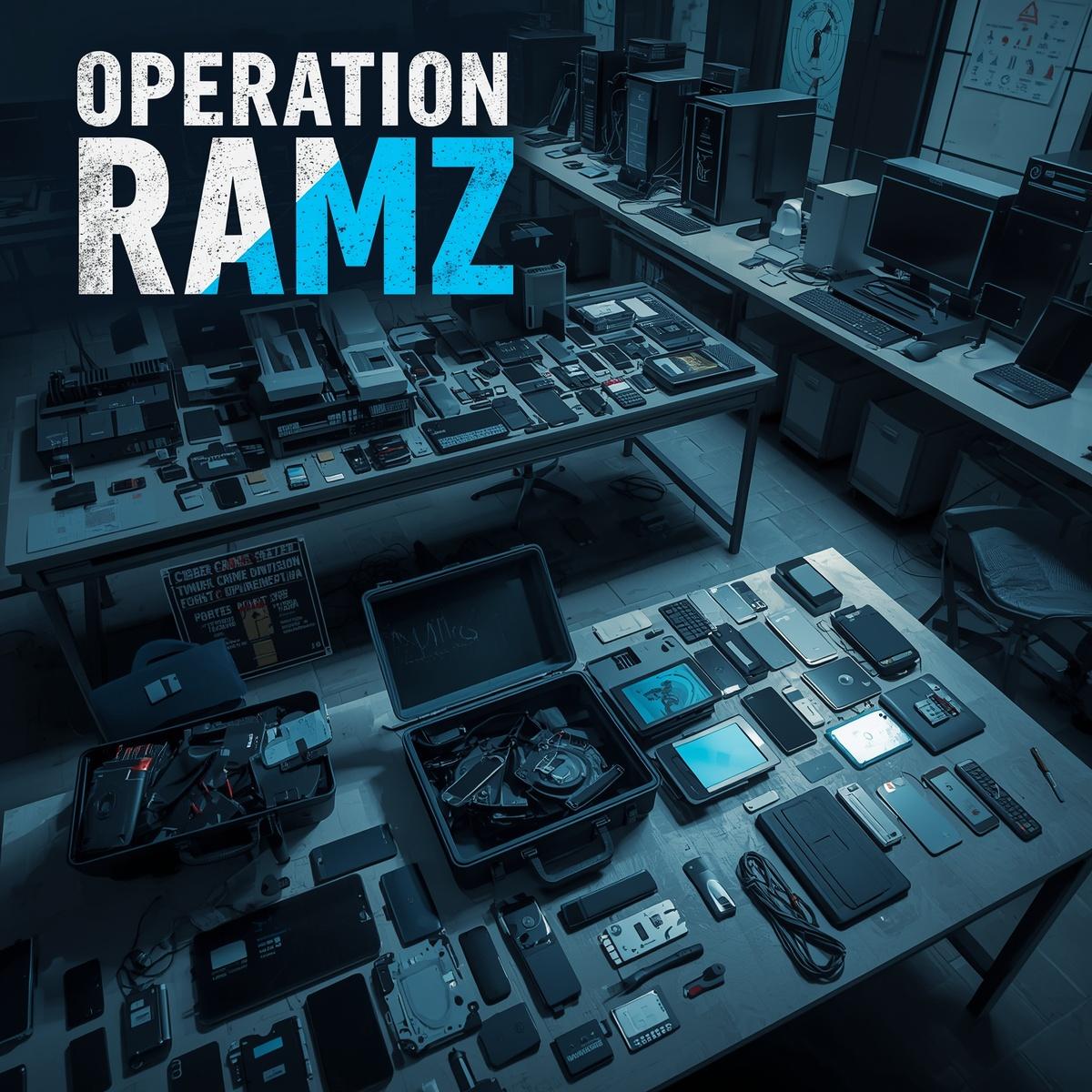
🚨 INTERPOL’s Operation Ramz Dismantles 53 Servers Powering Malware and Scam Campaigns Across MENA Region
🚨 INTERPOL’s Operation Ramz Dismantles 53 Servers Powering Malware and Scam Campaigns Across MENA Region
A massive international cybercrime crackdown led by INTERPOL has resulted in:
201 arrests
53 malicious servers seized
3,867 confirmed victims identified
across the Middle East and North Africa (MENA).
The coordinated operation, known as:
Operation Ramz
targeted large-scale phishing operations, malware infrastructure, online financial fraud, and organized cybercrime networks operating across multiple countries.
And honestly?
This wasn’t some isolated scam takedown.
This was industrialized cybercrime infrastructure.
🌍 What Was Operation Ramz?
Operation Ramz ran between:
📅 October 2025 — February 2026
and involved law enforcement agencies from:
✅ 13 countries
✅ private cybersecurity firms
✅ international intelligence-sharing networks
The mission focused on:
⚠️ phishing-as-a-service operations
⚠️ malware distribution infrastructure
⚠️ botnet hosting environments
⚠️ financial fraud schemes
⚠️ organized cybercrime groups
Nearly:
8,000 intelligence reports
were exchanged during the operation.
That level of coordination dramatically accelerated the identification of malicious infrastructure and threat actors.
💥 53 Malicious Servers Were Seized
Authorities dismantled:
🖥️ phishing servers
🖥️ malware staging infrastructure
🖥️ scam operation platforms
🖥️ command-and-control environments
🖥️ fraud-hosting systems
These servers were actively supporting:
💀 phishing campaigns
💀 credential theft
💀 banking fraud
💀 malware delivery
💀 botnet operations
The takedown disrupted active attack infrastructure across the region.
That matters because modern cybercrime increasingly operates like scalable cloud infrastructure.
Professionalized.
Distributed.
Persistent.
🕵️ Major Findings Across Multiple Countries
Participating nations uncovered a wide range of criminal activity.
🇶🇦 Qatar
Authorities discovered compromised devices unknowingly distributing malware.
Victims were notified and infected systems secured.
🇯🇴 Jordan
Investigators uncovered fake investment scams tied to organized fraud operations.
More disturbingly:
⚠️ 15 individuals were identified as trafficking victims forced into cybercrime activities.
This highlights how modern cybercrime is increasingly intersecting with human exploitation networks.
🇴🇲 Oman
A malware-infected server operating from a private residence was identified and neutralized.
🇩🇿 Algeria
Law enforcement dismantled a phishing-as-a-service platform and seized phishing toolkits, infrastructure, and operational devices.
🇲🇦 Morocco
Authorities confiscated systems containing stolen banking data and phishing software tied to ongoing investigations.
🤝 Public-Private Collaboration Played a Huge Role
Operation Ramz wasn’t just law enforcement working alone.
Major cybersecurity organizations provided threat intelligence and infrastructure analysis, including:
🛡️ Group-IB
🛡️ Kaspersky
🛡️ Shadowserver Foundation
🛡️ Team Cymru
🛡️ Trend Micro
This reflects a growing reality:
Cybercrime investigations now require deep collaboration between governments and private-sector intelligence teams.
Because attackers move too fast for isolated defense models.
⚠️ The Human Trafficking Connection Is Alarming
One of the most disturbing findings came from Jordan.
Some individuals involved in scam operations were not voluntary participants.
Investigators found victims were:
🎭 lured with fake job offers
🚫 trapped in cybercrime operations
⚠️ coerced into participating in fraud activity
This mirrors a growing global trend where cybercrime syndicates increasingly overlap with:
labor trafficking
organized criminal enterprises
financial exploitation networks
Cybercrime is no longer “just hackers in hoodies.”
Many operations now resemble transnational criminal ecosystems.
🌐 Participating Countries
Operation Ramz involved agencies from:
🇩🇿 Algeria
🇧🇭 Bahrain
🇪🇬 Egypt
🇮🇶 Iraq
🇯🇴 Jordan
🇱🇧 Lebanon
🇱🇾 Libya
🇲🇦 Morocco
🇴🇲 Oman
🇵🇸 Palestine
🇶🇦 Qatar
🇹🇳 Tunisia
🇦🇪 United Arab Emirates
The operation was additionally supported through:
🤝 INTERPOL
🤝 Qatar’s Ministry of Interior
🤝 CyberSouth+ initiatives
🤝 European Union and Council of Europe funding
🔐 Why This Matters
Operation Ramz demonstrates something important:
Cybercrime infrastructure is becoming increasingly globalized, modular, and resilient.
Attackers now operate:
☁️ across borders
☁️ through rented infrastructure
☁️ using phishing-as-a-service ecosystems
☁️ leveraging malware delivery automation
Defenders can’t rely on isolated enforcement anymore.
Success increasingly depends on:
✅ intelligence sharing
✅ public-private coordination
✅ cross-border operations
✅ infrastructure disruption
✅ rapid attribution workflows
🚨 Final Takeaway
Operation Ramz wasn’t just a regional law enforcement success.
It was proof that coordinated global cyber defense actually works when intelligence, infrastructure visibility, and operational collaboration align.
Because modern cybercrime is no longer local.
It’s scalable.
Automated.
Borderless.
And increasingly interconnected with larger criminal ecosystems.
The organizations and governments that collaborate fastest will likely have the strongest advantage against the next generation of cyber threats.


