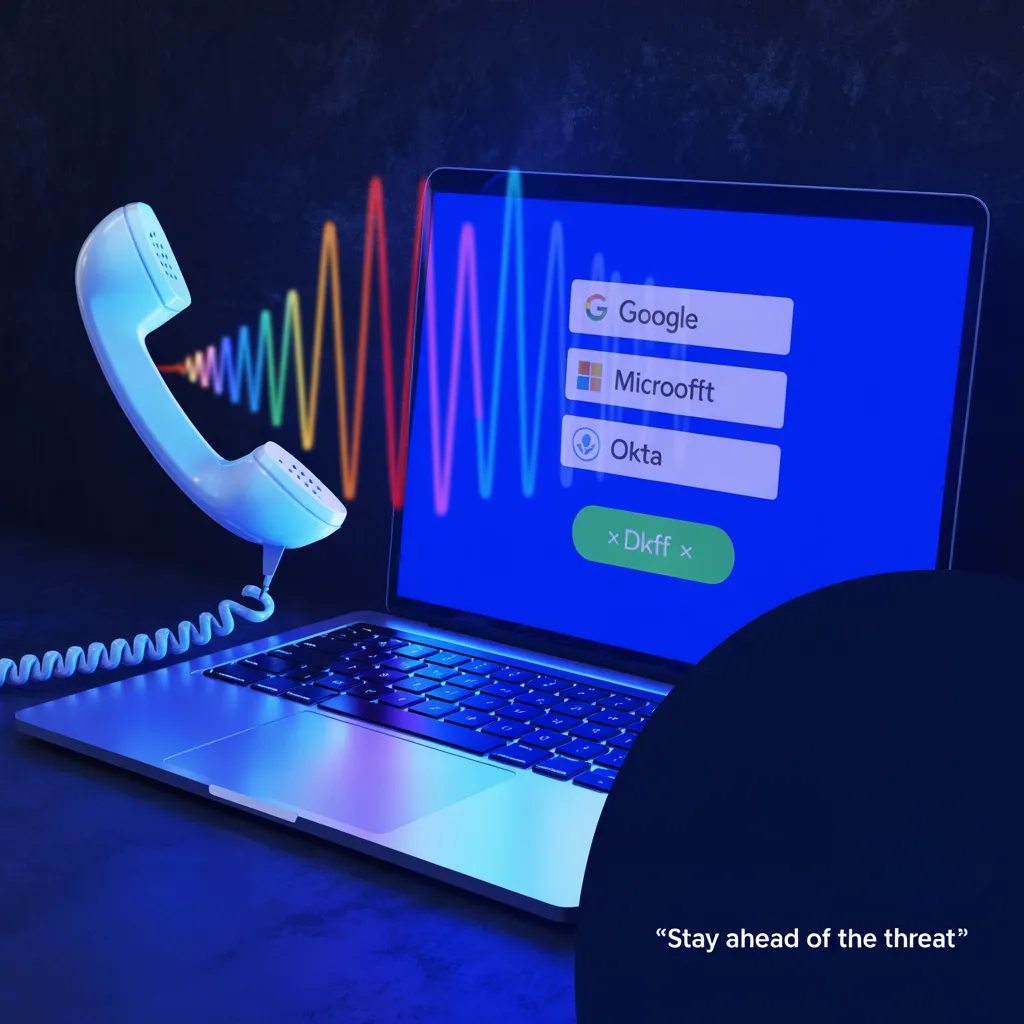
Voice-Driven Phishing Kits Are Defeating MFA at Google, Microsoft, and Okta
Multi-factor authentication was supposed to stop phishing.
Attackers adapted.
A new generation of Phishing-as-a-Service (PhaaS) kits is now combining real-time voice social engineering (“vishing”) with live browser manipulation, allowing threat actors to defeat MFA protections at Google, Microsoft, Okta, and major cryptocurrency platforms.
This is not automated phishing.
It’s guided compromise — with the attacker on the phone, controlling what the victim sees, step by step.
🧠 What Makes These PhaaS Kits Different
Unlike traditional phishing pages that passively collect credentials, these kits introduce real-time client-side control of the authentication flow.
While speaking directly to the victim, the attacker can:
Dynamically change phishing pages in the victim’s browser
Match pages precisely to the MFA prompt being triggered
Verbally instruct the victim on exactly what to approve or enter
The result is a synchronized attack where voice, visuals, and timing align perfectly.
As Okta Threat Intelligence researcher Moussa Diallo explains:
“The attacker can control what pages the target sees in their browser in perfect synchronization with the instructions they are providing on the call… defeating any form of MFA that is not phishing-resistant.”
🔄 How the Attack Works (Step by Step)
These attacks follow a repeatable, scalable workflow:
Reconnaissance
Attackers identify users, identity providers, applications, and internal IT support workflows.Infrastructure Setup
Customized phishing pages are deployed, and company phone numbers are spoofed.Vishing Engagement
Victims receive a call posing as IT or security support and are directed to a phishing site.Credential Relay
Entered credentials are forwarded instantly to the attacker’s C2 infrastructure.Live MFA Detection
The attacker attempts real logins to determine the MFA method in use.Dynamic Page Switching
The phishing kit updates the browser page in real time to mirror the MFA challenge.Verbal Manipulation
The attacker instructs the victim to approve the push, enter the OTP, or select the correct number.
🔓 Why Traditional MFA Fails Here
Push notifications, OTPs, and number-matching MFA all rely on a human decision.
These kits exploit that dependency.
Push MFA is defeated by instructing users to “expect” a notification
Number matching is bypassed by verbally telling victims which number to choose
OTPs are read aloud and entered in real time
The MFA challenge is legitimate — but the decision to approve it is hijacked.
🧩 PhaaS Market Evolution
These kits are sold via subscription-based underground services, dramatically lowering the barrier to entry.
What’s changed:
Vishing expertise is now commoditized
Kits include bespoke C2 dashboards tailored to specific identity providers
Operators specialize — some sell tools, others sell live vishing services
This isn’t just phishing software anymore.
It’s outsourced social engineering.
🛡️ What Actually Stops These Attacks
The only effective defense is phishing-resistant authentication.
Technologies that cannot be socially engineered include:
FIDO2 security keys
Passkeys
Okta FastPass
Additional controls that raise the bar:
Network zone restrictions
Tenant Access Control Lists (TACLs)
Deny-by-default access from anonymous and proxy services
Allowlisting trusted authentication origins
If MFA approval can be talked through on a phone call, it’s not enough.
🔐 The Elliptic Systems Perspective
This threat highlights a fundamental shift:
Attackers no longer fight technology — they guide users through it.
Security controls that depend on user judgment will eventually fail under pressure.
At Elliptic Systems, we help organizations:
Identify MFA methods vulnerable to social engineering
Transition to phishing-resistant authentication
Test vishing scenarios through real-world simulations
Harden identity infrastructure against human-driven attacks
The future of account security isn’t more prompts — it’s fewer decisions.
👉 Schedule an Identity & MFA Risk Assessment
⚠️ Final Takeaway
These voice-driven phishing kits prove one thing:
MFA that can be approved over the phone is already broken.
As attackers blend real-time phishing with live social engineering, defenders must eliminate approval-based trust entirely.
Authentication must be unphishable by design.
Elliptic Systems — Securing Identity Where Humans Are the Weakest Link.


