
Shadow AI: Managing Hidden Risks in Business
Cybersecurity, Shadow AI, Business Risk Management
Shadow AI: The Hidden Risk Transforming How Your Employees Use AI at Work
Shadow AI is quietly spreading across businesses and agencies of every size. While it can supercharge productivity, it also creates serious cybersecurity, compliance, and data privacy risks if left unmanaged. Understanding this new reality—and putting the right guardrails in place—is now a core leadership responsibility, not just an IT concern.

What Is Shadow AI—and Why It Matters Now
Shadow AI (often written as ShadowAI) refers to any use of artificial intelligence tools—such as public chatbots, code assistants, design generators, or automation platforms—by employees without formal approval, visibility, or oversight from IT and security teams. It is the AI-era equivalent of “shadow IT,” but with far more potential to expose sensitive information and create compliance violations in seconds, not months.
For many organizations, Shadow AI is not a future concern—it is already happening. Staff in legal firms paste contract language into generative AI tools to “simplify the wording.” Healthcare teams experiment with AI to draft patient communication templates. Architecture and engineering firms upload drawings, specifications, and project notes for quick summarization. CPA and finance professionals test AI to explain complex tax rules. Construction project managers ask AI to generate safety briefings or RFP responses. All of this AI usage may be well-intentioned, but when it happens outside official channels, it becomes an invisible risk.
📌 Key Takeaway: Shadow AI is not about “bad” employees—it is about motivated teams trying to work faster and smarter without clear, safe options or defined guardrails.
How Shadow AI Emerges Inside Businesses and Agencies
Shadow AI usually grows in the gaps between business needs and formal IT processes. When people feel pressured to deliver more with less, they naturally look for tools that remove friction. Public AI platforms are easy to access, often free, and incredibly powerful—making them irresistible for busy professionals across departments and sectors, from private businesses to public agencies and government contractors.
Legal and professional services: Attorneys, paralegals, and support staff use AI to summarize case law, draft correspondence, or rephrase complex language for clients—sometimes by pasting confidential matter details into third-party tools.
Healthcare organizations: Clinicians and administrators experiment with AI to write patient reminders, internal policies, or grant applications, risking exposure of PHI or sensitive operational data if not controlled.
Architecture & engineering firms: Designers and engineers upload design briefs, BIM snippets, or calculations to AI tools to check assumptions or generate alternative concepts, potentially sharing proprietary intellectual property.
CPA & finance practices: Accountants and analysts rely on AI to explain new regulations, draft client memos, or analyze spreadsheets, occasionally including client identifiers or sensitive financial information in prompts.
Construction and field operations: Project leaders ask AI to generate safety talks, training materials, or bid responses, feeding in jobsite details, supplier pricing, and contract language without understanding where that data may end up.
In agencies and regulated environments, the stakes are even higher. Public sector teams may unknowingly disclose sensitive citizen data, internal procedures, or non-public policy drafts while experimenting with generative AI. Without clear policy and technical controls, ShadowAI can quietly undermine years of investment in cybersecurity and compliance programs.
The Hidden Risks of Uncontrolled AI Usage
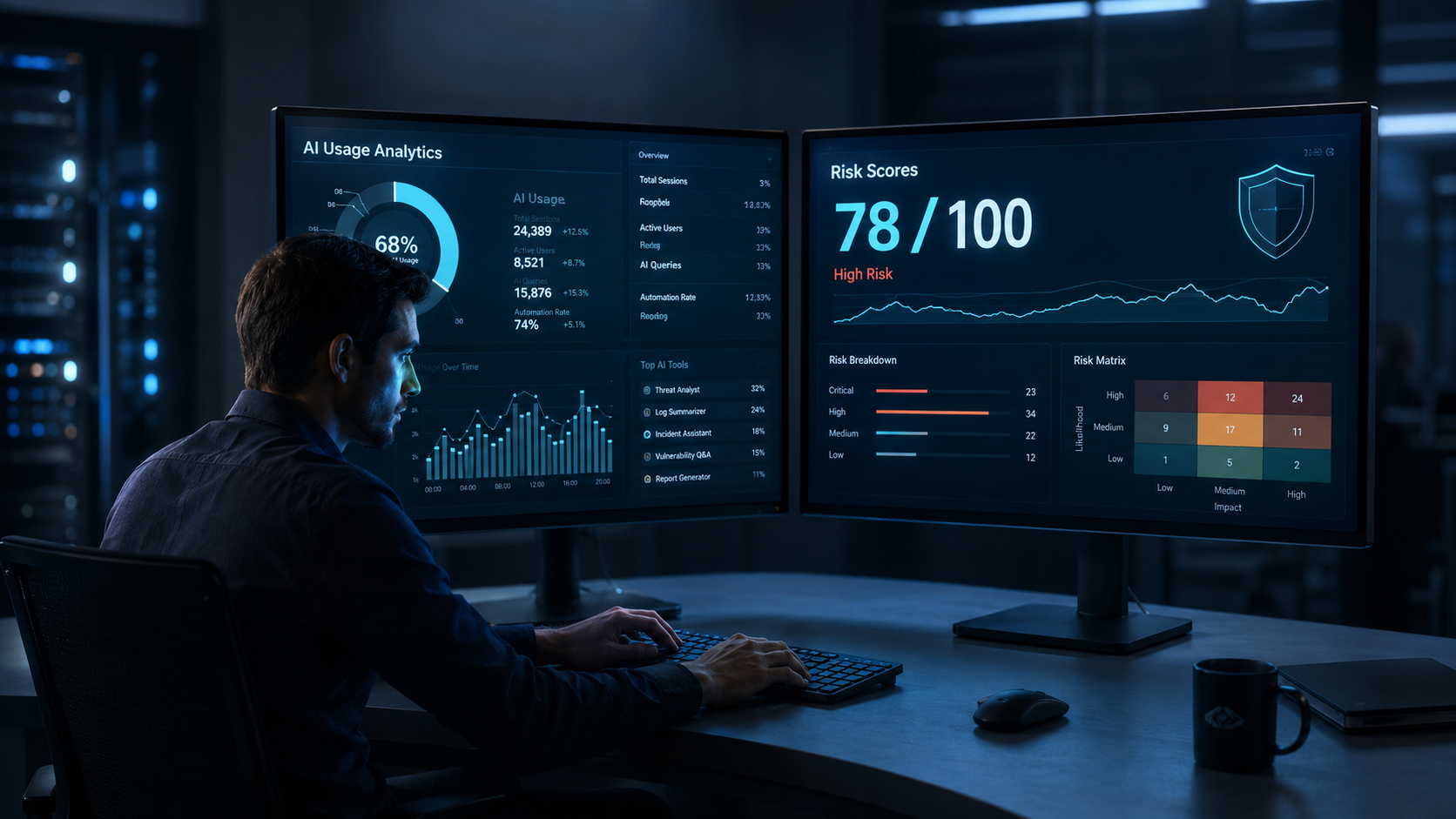
When employees turn to unapproved tools, leadership loses visibility into how business data is being handled. This blind spot introduces a range of risks that directly affect security, compliance, and reputation. Shadow AI is not just a productivity experiment; it is a potential threat vector that attackers, regulators, and litigators will not ignore.
1. Data Leakage and Loss of Control
Many public AI tools store user inputs, use them to further train models, or share them with third-party providers. When staff paste client names, contract clauses, designs, or internal financial data into these systems, they may be permanently transferring sensitive information outside your control. Even if vendors promise strong protections, you often have little contractual leverage or audit visibility when AI usage occurs outside official procurement channels.
2. Regulatory and Contractual Non-Compliance
Industries like healthcare, finance, legal, and government contracting operate under strict rules: HIPAA, GLBA, SOC 2, PCI-DSS, CJIS, and countless client security addenda. Shadow AI can easily violate data residency requirements, breach confidentiality clauses, or bypass approved vendor lists. If regulators or customers investigate, “we did not know” will not protect your organization from penalties or lost trust.
3. Intellectual Property and Confidentiality Exposure
For architecture, engineering, and construction firms, intellectual property is often embedded in designs, methods, and project documentation. For CPA, legal, and consulting firms, it lives in templates, checklists, and unique analytical approaches. When these assets are casually shared with public AI platforms, they can become part of a broader model that may later generate similar outputs for others, eroding competitive advantage and raising complex IP questions.
4. Integrity, Bias, and Reliability Issues
Generative AI tools can “hallucinate”—producing confident but incorrect answers. In a legal brief, tax advisory, patient communication, or engineering calculation, those errors can cause real-world harm. Without defined guardrails and review processes, employees may over-trust AI outputs, embedding inaccuracies, bias, or outdated information into client work and internal decisions.
5. Fragmented Security and Operational Overhead
Each unapproved AI tool introduces another login, another data flow, and another potential attack surface. Security teams cannot protect what they cannot see. Over time, ShadowAI leads to a tangle of unmanaged accounts, unvetted browser extensions, and unknown integrations that make incident response and forensic investigation much harder when something does go wrong.
💡 Pro Tip: Treat Shadow AI as a visibility and governance challenge—not just a “block the website” problem. Sustainable control starts with understanding how your people actually work.
Why Blocking AI Is Not the Answer
Some organizations respond to Shadow AI by trying to shut it down entirely—blocking popular AI domains, banning usage in policy, or discouraging experimentation. While this may feel safer in the short term, it often backfires. Talented professionals want modern tools. If they cannot use them at work, they may take sensitive tasks to personal devices or unmonitored networks, making the risk even harder to manage.
More importantly, AI is not a passing trend; it is a foundational capability that will shape how businesses and agencies operate for decades. Organizations that embrace secure, well-governed AI usage will outperform those that ignore or suppress it. The goal is not to eliminate ShadowAI but to transform it into safe, strategic AI adoption under clear guardrails.
Turning Shadow AI into a Strategic Advantage
Elliptic Systems Corporation works with organizations across legal, healthcare, A&E, CPA & finance, and construction to convert unmanaged Shadow AI into a governed, secure, and productive AI program. The objective is simple: empower your employees to use AI confidently while protecting clients, data, and operations. This requires a blend of cybersecurity expertise, practical policy, and hands-on change management.
Step 1: Discover How AI Is Already Being Used
You cannot manage what you cannot see. The first step is a structured discovery process to understand the current landscape of AI usage:
Reviewing network and proxy logs for traffic to known AI platforms and APIs.
Interviewing teams across departments to identify informal AI workflows and pain points.
Cataloging browser extensions, plugins, and SaaS tools with embedded AI features.
Mapping sensitive data flows to see where client, patient, or project information might be exposed.
This discovery phase is not about blame; it is about understanding how ShadowAI has emerged and where it is actually helping your business. Those insights become the foundation of a practical, risk-informed roadmap.
Step 2: Define Clear Guardrails for Safe AI Usage
Next, organizations need a set of guardrails that are specific enough to protect the business, yet simple enough for employees to follow in real life. Effective AI policies answer questions like
Which AI tools are approved, conditionally allowed, or prohibited?
What types of data may never be entered into public AI tools (e.g., PHI, PII, client identifiers, internal financials, unreleased designs)?
When must AI-generated content be reviewed or approved by a licensed or senior professional before client delivery?
How should employees disclose AI assistance in work products, if at all, to align with ethical and regulatory standards?
Elliptic Systems Corporation helps translate complex cybersecurity and compliance requirements into clear, role-based guidance that your teams can actually use—whether they are drafting contracts, designing a bridge, closing the books, or managing a construction site.
Step 3: Implement Secure, Enterprise-Grade AI Platforms
Once guardrails are defined, the next move is to offer safe alternatives to Shadow AI. That often means deploying enterprise-grade AI solutions with:
Strong data isolation, encryption, and access controls.
Contractual commitments that your prompts and outputs are not used to train public models.
Integration with existing identity and access management, logging, and DLP tools.
Administrative controls to manage which features and data sources different groups can access.
For agencies and regulated industries, this might include private AI environments, on-premises or virtual private cloud deployments, and specialized models tuned to your domain. The objective is to keep the power of AI close to your data, under your security controls, instead of scattered across unvetted services.
Step 4: Train Employees to Use AI Confidently and Responsibly
Technology alone will not solve ShadowAI. Your people need practical, scenario-based training that shows them how to get value from AI while respecting security and compliance expectations. Effective programs go beyond generic awareness slides and focus on:
Real examples of safe vs. unsafe prompts in your specific industry and roles.
How to spot and correct AI hallucinations, bias, and incomplete outputs.
When to escalate questions about AI usage to security, legal, or compliance teams.
How AI fits into existing quality control, peer review, and sign-off processes.
Done well, this training reframes AI from a risky shortcut into a sanctioned, powerful assistant that supports professional judgment rather than replacing it.
Step 5: Monitor, Adapt, and Continuously Improve
AI technology and regulations are evolving quickly. Guardrails that work today may need adjustment in six months. That is why mature organizations treat AI governance as an ongoing capability, not a one-time project. With the right monitoring and reporting in place, you can:
Detect new Shadow AI tools or patterns early and bring them into your approved ecosystem.
Measure productivity gains and quality improvements from sanctioned AIusage.
Update policies and training as legal, ethical, and technical standards evolve.
Elliptic Systems Corporation brings together cybersecurity monitoring, IT risk assessments, and AI consulting to provide a unified view of how AI is affecting your security posture and business performance over time.
What This Means for Leaders in Businesses and Agencies
Whether you lead a law firm, a regional healthcare provider, an engineering practice, a CPA firm, a construction company, or a public agency, the message is the same: Shadow AI is already part of your organization’s reality. The question is whether you will let it grow in the dark—or bring it into the light with intentional strategy and strong guardrails.
Board members and executives should treat AI governance as a core risk and opportunity, asking for clear visibility into AI usage and its impact on security, compliance, and performance.
CIOs, CISOs, and IT leaders should partner with business units to design pragmatic policies and secure platforms that support real work, not just theoretical controls.
Practice leaders and department heads should champion responsible AI usage in their teams, modeling good behavior and encouraging open discussion rather than quiet experimentation.
📌 Key Takeaway: Managing ShadowAI is not just an IT project—it is a cross-functional initiative that touches culture, ethics, operations, and client trust.
How Elliptic Systems Corporation Can Help You Take Control of Shadow AI
Elliptic Systems Corporation specializes in combining advanced cybersecurity with practical AI consulting to give organizations stronger security and genuine peace of mind. Our team helps you move from reactive concern about Shadow AI to a proactive, well-governed AI strategy tailored to your risk profile and business goals. Typical engagements include:
Comprehensive Shadow AI and IT risk assessments, including penetration testing and data flow analysis focused on AI usage.
Design and implementation of secure AI architectures integrated with your existing IT infrastructure and security stack.
Development of role-based AI guardrails and policy frameworks aligned with your industry’s regulations and client expectations.
Executive, technical, and end-user training programs that build a culture of responsible, high-impact AI usage.
Our promise is straightforward: we help you protect what matters most—client trust, sensitive data, and operational continuity—while enabling your teams to benefit from AI’s transformative potential. Instead of fearing ShadowAI, you can harness it as a catalyst for secure innovation.
Take the Next Step: Bring Shadow AI Out of the Shadows
Shadow AI will not disappear on its own. Every week that passes without visibility and guardrails increases the chance of accidental data exposure, regulatory scrutiny, or reputational damage. At the same time, your competitors are actively exploring how to use AI—safely—to serve clients faster, operate more efficiently, and make better decisions.
Now is the time to act. By assessing your current AI usage, defining clear policies, implementing secure platforms, and educating your employees, you can move from uncertainty to confidence. ShadowAI then becomes what it should be: a stepping stone toward a mature, secure, and strategic AI capability that aligns with your organization’s mission and obligations.
Elliptic Systems Corporation is ready to guide you through that journey with professionalism, deep cybersecurity expertise, and a practical understanding of how real businesses and agencies operate. Whether you are just beginning to notice Shadow AI or already wrestling with its consequences, you do not have to navigate it alone.
✅ Ready to move from risk to readiness? Request a free IT security risk analysis or schedule a consultation call with Elliptic Systems Corporation to assess your Shadow AI exposure and design the guardrails your organization needs here: https://ellipticsystems.com/discoverycall


